Showing posts with label music. Show all posts

Monday, September 28, 2009

Chouchou's new and virtual musical instrument: The Babel

Sometime this October, Chouchou, the Japanese musical group that exists only in Second Life®, will unveil The Babel, a new virtual musical instrument that harnesses their uncommonly fresh sound and makes it possible for anyone in SL to play and compose with it.


Arabesque Choche and Juliet Heberle are Chouchou, and together they have released two albums and several Machinima, and their live and streamed music wafts over its mostly virtual listeners like tropical oxygen, restoring their equilibrium after the agitations of the day.

What's all the excitement about? Check out this recent and stunning live performance, shot and edited by tadakuma Koba, featuring their new piano piece - r.i.p. - which Arabesque composed for his beloved father who recently passed away from a brain tumor. "His father taught him piano and the beauty of music," explained Juliet.


Chouchou - the sim - is possibly the chill-est spot on the grid to unwind, and you haven’t really experienced all that SL has to offer until you’ve used the free Chouchou HUD, which delivers panoramic views and deliciously slow camera tracking for a brilliant cinematic effect.


While the music industry may be dying a little death with each new Napster clone, virtual worlds are enabling new technical and artistic possibilities for composers and performers. Chouchou’s new Babel marks a novel step forward in that interplay. It is a towering and sculptural staircase in a pure-as-driven-snow white setting surrounded by contrastingly black boxes that hang mid-air, each endowed with a pre-loaded mini-clip of Chouchou’s trademark sounds.

Touch a box to hear a few keys of Arabesque’s fingers dancing over a piano keyboard or some harp strings, for example. Touch a percussion box and Chouchou’s unforgettable static and cymbals are heard. You can mix these sounds any way you like to create your own compositions, or purchase a full set to take home with you and play there.


The music in this video was created with "The Babel." Chouchou hopes that visitors to the Babel will record their compositions via Machinima and upload them as a response to this video

Here’s Chouchou’s tutorial for how to use the Babel:


I met with Chouchou at the Babel to learn more.


“In the Bible,” explained Arabesque Choche, “before the Tower of Babel was destroyed, all people could speak same language. In our Babel, people from all over the world can communicate through music."

“And the whole earth was of one language, and of one speech.” “And the Lord came down to see the city and the tower, which the children built. 6 And the Lord said, Behold, the people is one, and they have all one language; and this they begin to do; and now nothing will be restrained from them, which they have imagined to do.”- Genesis 11:1-9 (King James Version)


Arabesque Choche studied classical music and majored in piano study: “I often play Russian post modern music, but when I listen, Ravel is my favorite composer”

Each floor at the Babel is a different “track” or composition by Arabesque, and the boxes are grouped as elements with specific codes and chord progressions, and organized according to musical rules. Beneath each grouping of elements, there are boxes that have chords that can serve as accompanists. Each box in the same "element" is compatible with those chords. Some of the stairs have sounds embedded, as well.


Chouchou expects to add floors and “tracks” featuring new compositions over time. “The tower is growing,” said Juliet. “It's alive. Those sounds – our sounds – are born in a tidy room like a laboratory at the top of the tower and fall down below to make the tower of sounds. They might look scattered and random, but they are all kept where they are meant to be with certain rules. The tower is like our virtual music album. Each level is one track of the album and people visiting the Babel are making the album with us... together. ”

“When we play music in C major, it has a strong connection with G major, which is known as the ‘perfect fifth.’ In the Babel, I made every effort to ensure that elements that are close to each other have that perfect 5th relationship,” explained Arabesque. “This prevents the cacophony of many people playing the boxes simultaneously,” added Masami Kuramoto, Chouchou’s trusted friend and promoter, “so even if there are boxes near different elements, it still works, and this is what most other sound sculptures don't get right.”

Juliet, whose ethereal voice was surely dipped in honey, adds so much to each song but had never studied singing, and instead prepared for a career in fashion. “For me, designing fashion and singing are not so different,” she said. “I just do whatever feels right, but I need good music to feel something and sing to it, and Arabesque's compositions have that effect. I'd never taken singing seriously until Arabesque asked me to sing for him.”

It turns out that Juliet’s voice is Arabesque’s instrument, too. “I had initially made additional synthetic voice elements for the Babel in the same scale as Juliet’s voice,” added Arabesque, “but then I decided not to publish those because Juliet's original voice is just perfect for the melody."

I became insatiably curious about that first moment when Juliet sang for Arabesque, and what his reaction had been. Juliet had always loved his music, “so when he asked me to sing to it, I felt like my dream had come true. Then I wrote the lyrics for Chouchou’s first song: utakata.”

“To tell the truth, I didn't expect her singing to work well with my compositions,” interjected Arabesque. “I was aware that she was talented and that she understood my music, but hadn’t anticipated that she would perform so smoothly. My feeling during that discovery was... so happy. I was so glad.”

Chouchou has just released a new song, Sputnik. Their MySpace page can be found here. You can join their in-world group in Second Life: Chouchouholic for all their updates and news. You can teleport to Chouchou, the sim, directly from here.

See also:

Wednesday, June 3, 2009

Wherein I attempt to describe what I am looking for: NPIRL content guidelines

Posted by Bettina Tizzy

By the time each Thursday rolls around, I'm frantically trying to catch up with all the first-rate landmarks and notecards and emails I've received, rich with hot tips on new and undiscovered content and ideas that just might be worth sharing with the 2,600 members of my Second Life® groups Not Possible IRL and Impossible IRL.

I send at least one in-world notice a week - usually late on Fridays - featuring some 3 to 20 items that I've culled from hundreds of these suggestions, and I'm often asked what my selection criteria is. In addition to intriguing building tips, info on other virtual worlds, and advocacy for the rights of content creators in Second Life, my main focus is on creations that are Not Possible in Real Life.

Are my selections opinionated, discriminating and highly subjective? Yes, they are. There are many other ways to discover information and calendar listings on the topics relevant to your particular interests in Second Life, so this is my personal attempt to provide you with a distillation of what I think is cool, trendsetting and even groundbreaking, always within the context of Not Possible IRL.

Am I an academic, schooled in the arts? I am not. Jay Newt of Brooklyn is Watching once called me a theme park mistress and I can subscribe to that. Not Possible IRL and Impossible IRL are not art groups, and for that matter, this blog is not an art blog. They do feature and include art, but that is not all we are about.

That said, what follows is an attempt to describe virtual content that is Not Possible in Real Life or NPIRL. These guidelines were drafted with only prim and/or script-based content in mind, as I don’t believe – but I’d like for you to prove me wrong - that there is such a thing as NPIRL music. How that music is generated, however, can definitely be NPIRL (Komuso Tokugawa and Dizzy Banjo, I’m looking at you!).

Theatre and live performances often enable suspension of disbelief via real-time special effects and situations (think DanCoyote Antonelli’s ZeroG SkyDancers, CARP's Metropolis, Gazira’s Hammering the Void, and Grace McDunnough’s Musimmersion, for example).

Not Possible in Real Life (NPIRL) CONTENT (architecture, art, landscaping) is a generous combination of the following:

* Surreal, fantastical

* Indulges our sense of make-believe (can do strange, wonderful and surprising things; makes us laugh)

* Can fundamentally affect our behavior, perception and even our self-perception

* Physically impossible in Real Life, or could only be created at enormous/unrealistic expense (defies the laws of gravity and physics in general)

* Immersive

* It almost goes without saying that NPIRL creations in virtual worlds are three-dimensional. While photography and other 2D images may portray NPIRL content, they are difficult to render in-world and for this reason, I enjoy them best on the web. I am an avid user of both Flickr and Koinup, where so many of you post images taken in virtual worlds. I wish more machinimators would join the Not Possible IRL YouTube group, though their group management tools there are very poor.

NPIRL FASHION is garment-based and not a biological part of the avatar. In addition to clothing the avatar, it might do strange and wonderful things, or make us do strange and wonderful things. It can defy the laws of physics or expose the avatar’s body to extreme heat or cold or exploding particles or sharp things. It might include elements (such as clouds, or sunshine, or snakes, for instance) that could never be used in Real Life.

NPIRL AVATARS are fantastical, surreal, or funny, or surprising, but they all have one thing in common: They are definitely Not Possible in Real Life. They aren't human, or dogs, cats, horses, etc., unless they are exceptionally unusual (a unicorn, for example). While nekos, faeries and elves are NPIRL, their appendages must look integrated, credible and not like props.

I want to especially thank the members of my working group Not Possible IRL for their guidance and inspiration, and the extreme explorers and content creators of the vibrant Impossible IRL community who have sent in priceless tips and ideas. All this is possible because we've pooled our efforts and share an intense appreciation for the 3D platform. I adore you!

Sunday, May 31, 2009

Chouchou leaps from digital platform to digital platform: Releases first album + iTunes

Posted by Bettina Tizzy

Until now, the only way you could hear Chouchou, the Japanese musical group with a panoramic, shimmering sound that existed only in Second Life®, was in-world via live concerts, on the lovely beach that is their Chouchou sim (teleport directly from here), or on your own land parcel with the help of their “Little Tiara,” which enabled you to stream their weekly radio program, as well as all of the songs in their repertory. The radio box had ceased to operate some months ago, so I’ve been ending each day at the Chouchou sim lately because I’ve missed hearing their music, and yes, I’m a card carrying member of the Chouchouaholic group.


Finally and effective immediately, I can have Chouchou music any way I want. Juliet Heberle and Arabesque Choche have remastered and remixed every single gorgeous track and released one album with still another on the way on the Earth Records label.


NARCOLEPSY features ten tracks, including Coma. “It is sung in a language from nowhere. I created the lyrics, imagining words from somewhere very, very far. Yes, people really like the song, even if they don't know the meaning of the words,” explained Juliet.

The icing on the cake is that we can now buy and vote for their songs on iTunes, the most popular source of music in the United States, and it is once again possible to stream it on our land parcels in-world, this time via a direct web link.

Never heard Chouchou? This was their first music video.

"coma" Music Video - Chouchou


There's also a brand new fan group for Chouchou on Facebook.

See also:
Enjoy Chouchou while you can.


Many thanks to Masami Kuramoto who whispered the news in my ear last night!

Wednesday, April 15, 2009

New answers and more questions regarding the upcoming virtual world Blue Mars

Posted by Bettina Tizzy

I learned considerably more about Blue Mars last night, which is not named after the science fiction classic by Kim Stanley Robinson, despite the fact that its founder, Henk Rogers, is a big sci-fi fan.

...

By the time he left his secure job where he’d been managing business development for the division, nearly 28 million units of Microsoft’s X-Box 360 had sold worldwide in just over three years. The global economy was imploding, and still Jim Sink packed his belongings in rainy Redmond, WA and hopped on a flight to Honolulu where he would become vice president of business development for Avatar Reality, the company that has been developing Blue Mars since December of 2006.

There, he joined interactive game luminaries Henk Rogers (creator of Tetris, Blue Lava Wireless and founder of the Blue Planet Foundation, among other things), Kazuyui Hashimoto (formerly vice president of technology at Electronic Arts) and 21 others, all working at breakneck-speed towards the Beta launch this June of a new virtual world.


Until recently, not much has been known about Blue Mars except that it will be significantly different from both Second Life® and OpenSim in that it will be powered by the bleeding-edge game engine CryEngine 2 that boasts unparalleled and nearly photorealistic graphics, and that end-users will not be able to create content in-world.
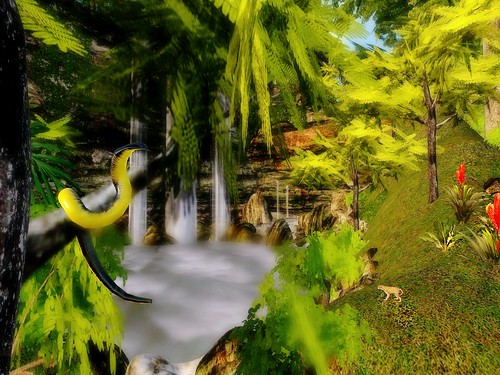
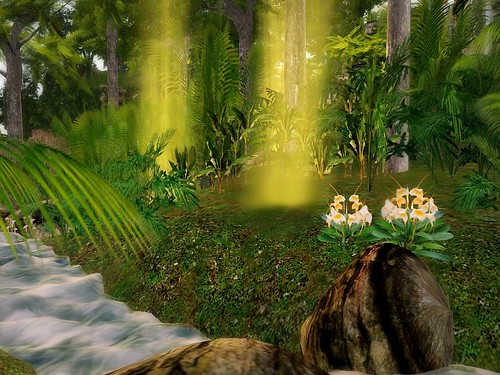
Many Second Life die-hards consider this last point to be a deal-breaker since user creativity is at the very core of Second Life’s raison d'ĂȘtre.

More information became available last week regarding the free-to-play and free-to-download “massively multiplayer virtual world”:

* The world was built for Vista-based machines.

* The company is confident that many thousands of users will be able to simultaneously log into a single “city.” If a particular server gets so popular that it reaches its limit and performance begins to suffer, they can “shard” the server. (More on this later)

* Software Development Kits (SDK) are available for download to registered developers for free so that they could begin creating Blue Mars-compatible content offline. Both the development kit and the preview editor are WYSIWYG.

* Despite rumors to the contrary and in regards to performance, the company stated that most 3D cards on the market today will be able to run Blue Mars, and that even ATI 4850 cards that go for about $120 after rebates can “deliver a strong performance.”

* There is no geographic continuity between places in Blue Mars. Each place or city is a node in the Blue Mars network. Each place is usually around 2x2k. Places can link to one another but you can't fly across a contiguous space above a certain size. When you move from place to place, there is a loading screen.

* “Easy to program” artificial intelligence will be offered to developers who are interested in having conversational NPCs (non-player characters/bots). Avatar-Reality has created an AI gateway to allow third parties to link to their own AI servers. They hope to catalyze the development of game AI by “providing a platform for people to integrate their AIs in an affordable high fidelity real time online environment.”

* The Blue Mars Dollar (pegged to a fixed rate against the US dollar) is a single integrated currency system that “lets developers easily and securely charge for items and subscriptions.” End users can buy packs of currency through the Blue Mars client or through a web site. They can use a credit card, Paypal, or retail Paybycash cards to buy Blue Mars currency. There are no refunds on Blue Mars currency and end users can't cash out. However, if you are registered as a developer or vendor with Avatar Reality, you can charge Blue Mars dollars for goods and services and get paid in US dollars or your local equivalent currency through Paypal.

* Gambling will not be allowed.

...


I spoke at length with Jim Sink last night.

Your business model is that of providing a platform to developers so that they can turn around and create their own Cities, RP games, or sublease land to others. What about government? What are your Terms of Service? Will each developer rule his or her fiefdom? Will each developer be responsible for newbie education in that environment?

We’re still working out the ToS, but yes, developers will control and set content rules for their regions. There are two ways that developers can get started: they can manage their own City/game server in the Blue Mars network or they may choose to sub-lease land from an existing City developer, which could be a City block, for example. Avatar Reality charges a setup fee and monthly fees to keep your place online, but rather than set our fees based on land size, we charge based on concurrent user capacity (CCU.) It works like the minutes plan on a mobile phone. Our promotional pricing is available under NDA and our public pricing will be available later in the summer.


In August 2008, Avatar-Reality announced that Virtual Space Entertainment, Inc. (VSE), led by the much celebrated artist and concept designer Syd Mead for films such as Blade Runner, Aliens and Tron had become a third-party developer.

Will users have access to voice at launch?

No. We’re working on that and realize that it is important. When rolling out a complicated platform like this, we need to first make sure that it is stable and secure.

I understand that Blue Mars was built for Vista based machines. I’m working off of Windows XP. Will I be able to run it? And what about Mac users?

Yes, no problem for XP, but Cryengine doesn't run on OS X, so no support for Macs. Boot Camp works if you want to dual boot, and server-side rendering services like Online should help expand our market to netbooks and Macs.

What about integrating the web to your world, such as HTML access? Any unique offerings in that area as compared to Second Life?

We can’t render HTML pages natively, but there are multiple ways to work with the web. You can display Flash-based content and the data can go in both directions, so you can update a page out world with content that is going on in-world and vice-versa. When people want to draw from a database, in other virtual worlds it has to go through the hosting service. In Blue Mars, the client can connect directly to the data source and doesn’t have to go through our servers. For example, a movie that is screening in-world is not streamed by Blue Mars; that movie is pointed to an external server. Video will be handled using Scaleform, a flash compatible middleware package that we use for all our UI.

What about scripted objects? What language will you use? Can developers introduce their own scripts?

Yes. LUA-based scripting and our own Casual Games API to give developers a head start.

You say that Blue Mars will be scalable for thousands of simultaneous users per region, and that you have the option to shard a server if it gets too popular. Please describe, in lay terms, what “sharding the server” means?

If it got to the point where 10,000 simultaneous users got to be too much for that region - and we won’t know until we get there - we will probably want to mirror that region (make a duplicate of the region).

How easily will people be able to rejoin their friends if a region gets sharded? What if people are having sex or giving a presentation, teaching a class, or waiting for a purchased item to be delivered? Will they be separated from their friends? And while we are on the topic, will you allow sex in Blue Mars?

We haven’t decided yet on the sex question. As for sharding, it wouldn’t work like that. The developer could instance the entire server and call it “New Honolulu.” You would add that server to a list of several Honolulus. We would never split it and take half the users one way and half the other way. We will also integrate messaging tools so you can join your friends in the different shards of the single server.

We’ve heard about developers, RP gamers, and shoppers from you, but are you also targeting business?

Businesses tend to be excited about Blue Mars for a few reasons. A lot of people in real estate have all these terabytes that are stuck on their hard drives. Instead of creating a new way to build 3D assets, we’ve created import tools. Using a CAD program, they can bring those terabytes into Blue Mars with very little effort and then show off model homes and model communities in an interactive environment. As for advertisers, much depends on building a critical mass of active users.

How about educators?

We will be providing a safe and controlled environment with deep scripting and monitoring support that will give developers the ability to test and track actions and choices made in their region.


You tout robust security and content management. How will you protect developers? Content theft is a significant issue in Second Life and OpenSim.

Anyone who would say you never have to worry about content theft doesn’t know about history. What you do is build methods for the eventuality of dealing with it. Everything is encrypted in our world, and we’ve made it very difficult for people to reverse engineer the system. Say you create a new dress that you want to offer at your store. Every item, when it is uploaded into the system, gets a unique registration stamp and a time stamp. Even if someone just copied an item “visually,” the original creator can submit their code and comparing it against the time stamp, we can determine if it is in violation of the system.

Will there be an approval system for each piece of content before it can make it into the system?

No approval process.

What, in your view, is the special allure for Second Life content creators, assuming of course that they are already competent with the Blue Mars-compatible software and not just working with prims? Will they have to cozy up to the game developers to adhere to their planned environments? Let’s say you make a living creating furniture in Second Life. How might this translate to Blue Mars?

By the end of this week, there will be two editors that Blue Mars provides: A full-development environment that is completely free, though we are limiting the number of people we’re offering it to at this time. We are also releasing a streamlined sort of “sandbox” that would be ideal for a furniture creator. They can take the model that they created in 3ds Max or Maya, for instance, import it into the sandbox editor, and see exactly what it will look like in Blue Mars.

From the get out, the platform has been created with an ear to content creators and artists. “Why can’t we just continue to use the tools we normally use? I don’t want my stuff copied.” They want a reliable system to monetize their work and a universal payment system. Most digital content creators don’t work in prims. They didn’t want to create proprietary content with creation tools like prims or have to relearn how to create content.

After June, we will be providing templatized shops. Developers will sub-divide land and sublease it. Create a space, fill it with your furniture and offer things for sale. Most people will want to set up shops somewhere that is popular. We will probably be offering a limited number of sub-divided parcels to give to developers and operate a test “Demo” City in the beginning where we can roll out new features and offer a limited number of spaces in that city for people to experiment.

Will you have a web-based sales model like Second Life’s Xstreet?

Not at this time.

What about artists? How will they benefit from creating sculptures, for example?

If it is just a matter of a public space where they can share their work, they can lease the space from a City developer and put their content directly into that City. They deliver their data file to the City director and it will be up to the City developer to determine how frequently the content updates will take place, which will not be as frequent as they are in Second Life (real-time). Some might do it every day, while others might update every two weeks. Each city is condensed into a pack file that includes all the geometry and textures. The file they deliver comes in a single pack.

I realized then that we were thinking about two entirely different things. Jim talked about a coming Art Competition that will launch on April 20th. He spoke of fashion, furniture and other practical items that might be exhibited - in addition to paintings, sculpture and particles - with each participating artist receiving a 3m x 3m x 3m exhibition space in a shared virtual gallery to display their work. I described how the mixed-realities Brooklyn is Watching gallery/art-critique space in Second Life had begun with a small land parcel, thinking that all of the art would be rezzed directly on the ground, only to learn that the artists would ingeniously go underground or have their art pieces begin at ground-level and soar as far up as 3,500m in the sky. I told him about ZeroG SkyDancers and how the choreographed dancers wear cascading costumes that are many times larger in size than the avatars wearing them as they move about the sky. (More on art later).

Oh, you won’t be able to fly for the most part.

Won’t be able to fly!?

If a developer wants it, their avatars will be able to fly, but the standard locomotion is not flying. You can get into a vehicle and fly but the framework for people to locomote isn’t flying.

So each developer would have to introduce the animations and fiddle with the physics? What about teleporting?

Teleporting is a balancing act for us. Teleportation to any place at any time is a mistake for a developer. It reduces the potential for the social fabric of a place. You don’t want to make people walk everywhere though. If I want to get from point A to B there are several options beyond walking or running. If I need to move two kilometers away, it is silly to have to wait for a bus. If you have a home, you will be able get there. People will experiment with a lot of different methods.

What news have you for musicians?

People will be excited to use Blue Mars for music, a place for self-expression and community. You want to be able to create events that will draw a crowd and not have the appeal of the event be diminished by the crowd itself. The Blue Mars platform scales to support thousands of simultaneous users per region, so if you are spinning music or creating a place for people to congregate, this won’t be a concern.

Will real-time jams between musicians from all over the world be possible?

They will.

Any advantages for virtual architects?

CAD will be importable, but of course, the further you are away from 3ds Max and Maya, the more steps you will have to take. Keep in mind that you don’t need the plumbing geometry for a real-time rendering. The bottleneck isn’t the polyganol count, but the textures that are the problem. The rendering will be perfectly accurate.

I understand that you will have real-time analyses of player activity. How will marketers be able to use this excellent information?

Each City developer will set some policies. We’re not sure yet how the implementation will run out but we do know this: If it happens in world, it can be tracked and reported on in real time. How many people sat down in Toyota’s new car, for instance, along with any demographic information the users are willing to share.

That raises a number of questions regarding user privacy. Can we assume that you will protect each user’s personal information?

Yes.

Speaking of demographics, what about men playing as women, or folks who prefer not to be gender-specific? How will that play out?

It will be a matter of how they registered. We aren’t going to verify gender.

What about alts (alternative accounts)? Will you allow that?

We haven’t decided yet.

Will developers be able to limit what users can take from their City to another, or what can be introduced to their City?

You can limit what can be introduced. If you are Sony Pictures and creating a virtual Monaco and it is a black tie-only space, when a user gets there, the system can prompt that user to let them know that this is a black tie-only area and provide information about the only costumes that will be available in that region. You don’t want people running around in Speedos in your James Bond world.

...

UPDATE: Soon as you're done here, you might want to skedaddle over to Dusan Writer's blog where he has an interesting discussion going and his initial analysis on Blue Mars... plus he called me a Goddess! Well, he can't be right all the time. :)

Wednesday, April 1, 2009

Attitude adjustment with the help of a little steam

Posted by Bettina Tizzy

I thought I'd take a moment out of our busy virtual lives to celebrate a couple of individuals who inspire us in Real Life with their steampunk approach to architecture and life even, and also to alert you to the existence of the Clockwork Quartet, a musical group in the UK that isn't really a quartet at all but rather a thirteen-piece band featuring an odd assortment of instruments, including a musical saw and a double kit composed of old typewriters, scrap metal, metronomes, clocks and other found objects.

The Clockwork Quartet is of particular interest to us since one of our own, NPIRLer and Second Life®r Art Laxness (aka Will Segerman) is a member, performing on the 5-string banjo. For your information, it was Art who created the charming (and sadly copybotted) prim newbie that so many of you - including myself - have enjoyed placing in highly irregular situations.

~*~

Then there is dedicated Burner and steampunk creator, Tom Sepe, with his steam-powered Whirlygig Emoto, among many other things. Drop in to Second Life and say hi to us sometime, Tom. I've a few people I'd love to introduce you to, including some of your fellow Burners.


~*~

Lastly but hardly leastly, David Trautrimas, is a Canadian artist who disassembles old kitchen mixers, hole punchers, waffle irons, staplers, vacuum cleaners, coffee machines and other household objects, photographs the parts, and then puts them back together digitally, into what he calls “Habitat Machines.” Can you say "Brazil?"


Oil can residence, 2008


The Typewriter Factory, 2008


Sprinkler house, 2008


Electric razor cooperative, 2008

Many thanks to David Trautrimas who graciously allowed us to reproduce his photographs here.

Friday, March 13, 2009

The Patron Saints of Poetik and what they have wrought + Interview with Hern Worsley, it's creator

Posted by Bettina Tizzy

You may wish to listen to the music that is played at Poetik while you read this.

Oh, to be cherished by Nur Moo and JuJu Dollinger (aka Ju)! To be housed and given unfettered artistic freedoms by the new Medici of the Second Life® grid!

Nur is an esteemed fellow-Flickrite with a photo style somewhat reminiscent of Tamara de Lempicka that I am fond of, but I'm only just now realizing the degree to which she - together with Ju - has mutated into a bona fide patron of the arts. Months of assembling, fostering and cross-pollinating an electrifying cross-section of artists and musicians will finally come together full force tomorrow, Saturday, March 14 with a party that is expected to run 24 hours.


Event poster featuring the Patron Saints of Poetik

The duo began their curatorial work back in March, 2008 on the mixed-use sim Sintetika, even before they took ownership of it, but what they are best known for are their branded parties: Poetik. I've never been to one but as I understand it, they expose people to new ideas and environments, and then encourage them to be disruptive and create. Hmmm. Sounds like a good workplace tactic, doesn't it? In their case, it's about parties: art parties, concept sound and light reveries.

A few months ago, Nur (a graphic and fashion designer in Parma, Italy) and Ju (a French artist in Real Life) boosted the pace and snapped up a pair of sims because, "...using Second Life network possibilities to share Art, we are trying to create a different visual / sound experience that goes further than what is possible in Real Life." They'll get no arguments from me on that count.

"I was always surprised, from the beginning of my second virtual life, by how much people try to copy reality and don't try to be more creative," said Nur. "That's why I look for the most visionary people on the grid and (then) try to support them. (We try to make) Poetik this total experience; every month a different artist creates a different installation and every week there is a music event there."

"Different, but always experimental, is our project with the first sim [formes nocturnes]. We call this sim "our art playground," and invite the artists we like the most in the virtual world to play here with 15,000 prims... so it will be really an unique experience. Selavy Oh is the first artist to build at [formes nocturnes]," said Nur.


Selavy Oh's hallmark is the studied application of physics to prims

Nur added, "With time, the Poetik party has grown. We needed a new place, a whole new sim, and we decided to share this new 'work' with Hern Worsley, an open-minded artist and one of best builders in Second Life with whom we share a creative vision for what the metaverse should be like."

Speaking for myself and given my schedule, wild horses couldn't make me blog these days, but I'm not completely crazy. One teleport to the new Poetik Velvets sim where Hern Worsley has been ensconced and Kung Fu'ing prims for three months, and I was tossing my busy calendar aside.


Poetik love by Hern Worsley

You remember Hern, don't you? Owner of Avz and hairdresser of my dreams? Creator of the cyberpunk specs worn by that chimp that left me frothing with curiosity?


Hern Worsely at Poetik

Turns out that Hern is about way more - eons and tons more - than fantastic avatar adornments. To begin with, I'm a sucker for black and white striped ticking, and a whole sim ground textured with it strikes me as elegant and completely chic. Then consider the environment it is all situated in... Why, it's an endless aurora borealis!


This photo was taken using the Funky Funky Windlight setting, which Hern recommends at Poetik

Then... take a good look at this edifice on its own merit. It is, at once, industrial and organic.


The moment I saw it, I was reminded of a certain chair...


The Wassily Chair was designed by Marcel Breuer in 1925-26 while he was the head of the cabinet-making workshop at the Bauhaus

I had a chat with Hern to learn more.

There are some of us who are convinced that you are actually a master architect, here to let loose some creative juices.

Hern: It's just about nice lines and pleasing shapes that flow. I think stuff should just speak for itself really, and everyone can interpret it how they like. I've been doing Audio and Visual stuff in my own time in Real Life but it has never been my profession. It is now, though... apparently. I've learned everything in Second Life, to be honest. Without Second Life, I'm prolly not much use to anyone as far as creatively goes. ;) For me, it is a perfect medium to work in. I just hope it carries on and develops. I think it is possible... the next 5 years, once all the hype is over, and all the inflated expectations and misunderstandings, etc. Now that we're just coming out of that phase, I hope we'll move into a more steady growth phase where people who really "get it" are coming in and working.

How'd this come together?

Hern: Nur has been a good supporter of my store for a while now. She'd commission custom work from me a lot, so we've kinda developed a relationship via this around work. So yea, she just mentioned to me that she was looking to get a new SIM and would I build it? I knew I'd get freedom so I was pretty much up for it from the start.

What were her stated objectives?

Hern: She didnt really have 100% solid ideas. I had to talk with Nur the whole way to solidify what she wanted, etc. I'm not sure I'd do this without freedom, basically. She's a dreamer, really, but it's great. Wouldn't have it any other way. I see it as her showcasing the artists she likes. We both want to show that Second Life can be a lot more than just orgy rooms and shopping malls. Come try this... It's fun. Follow me, plz princess.

He then weaved his way (he uses an endearing kinda tipsy walking animation) over to one side of the building and invited me to sit on a sphere.


Sit on one of these for a bouncy ride to the ground level

Hern: For me, the time is always "now." I love what is new. I don't like looking back all the time. I'm excited by technology. We should be celebrating Second Life and virtual worlds and all the new possibilities they bring us, not building toy towns, and little versions of Real Life: cars, houses with kitchens...


Hern: I have this idea. How often do you zoom right out from a SIM, like to see it all? When I was doing this I thought people should be able to zoom out and then the surfaces of the SIM can have buttons and hold info, like a giant 3D website, basically. That would make it really elegant. If you go back to the scale of an avatar, all these surfaces are also really nice spaces for your avatar to be in... getting that connection in scales could be interesting.

By the way, to fully experience Poetik Velvets, you simply must, must, must disable camera constraints. Only in this way will you be able to free your camera and zoom way back to view the sim from above and all sides. This is something everyone in Second Life should learn how to do.


Thank you, Torley, for your smart and fun tutorials!

If there aren't too many people on the sim, please increase your draw distance so that items will render for you at greater distances.

Increase your Draw Distance
> Edit
> Preferences
> Graphics
> Check the "Custom" box if hasn't been already
> Use the slider to go to 512m (the higher, the laggier, but it's worth it unless you are in a laggy situation)
> Hit the OK button and close
IMPORTANT: Many people forget to set the Draw Distance lower after they've been maxing it out. I keep it at about 200m most times these days, and increase it when needed.


Music to work by is of critical importantance to Hern, and he shared the stream that he used throughout the three months of creation: http://205.188.215.225:8018/, which I thought was mighty generous of him, since most people keep their stream sources private like a great hand of cards.

Hern: It would be pretty selfish of me to keep them all to myself. This radio station was a huge influence on my work. They were in Second Life a while ago but not anymore. I may try to coax them back soon though. This station makes me more intelligent, lol. I don't really have words for what I make, but music does a great job of explaining things I think.


The Moo Gallery

Was there an "aha" moment?

Hern: Yea, the "aha" moment was about 5 evolutions ago, though, lol.


Hern created about 90% of the textures he used. He has just gotten started on Flickr. You can access his stream here.

How did you alter the water surfaces?

Hern: Mega prim, double layer. Secret recipe ;)

Are the shapes for this silvery wheat-like growth on the sim inspired by kitchen utensils a little bit? (Silly question, I know, but I cook so maybe not so silly). Musical chords?

Hern: I guess I see 'em as kinda receptors or circuitry, but then I see a lot of correlations with nature and technology anyway. Art nouveau and art deco styles definitely reflect that, too.

Hern lives in a British town but has big plans for the not-too-distant-future.

Hern: You know what I'm gonna do :) I'm taking a laptop and going off to Asia, and I'll be working in Second Life from all over the world soon, I hope, via wifi.

Ah, sounds like an adventure and good economy!

Hern: Yea, like my ideal... live in a treehouse and work in a virtual world. I think I can see a way to like travel and earn money from my work in Second Life, which means I don't have to ever stress about work or running out. I don't see it as a holiday, I see it as a lifestyle. I'm treating it like a mission. I'm gonna take a lot of tech with me. I've found a way to run a laptop with solar power.

Theft is an important hindrance. And in the world economy that we are entering now, it is a primary consideration.

Hern: To be honest, what I earn here in Second Life is more than most people earn in many countries in Asia, but I want to get away from the west and its values and priorities. You can't let fear rule you or you'll never do anything. I am of the belief that 90% of human beings are very nice people, and I expect I'll find out I'm right when I travel, too. But yea, I will be equipped up and as secure as I can be for my tech stuff.

Last question. What did you learn from making Poetik that you are taking with you to future creations?

Hern: A lot. Well, for one, I learned I can do it. Also, it has engaged me a lot more closely with the "art" scene in Second Life, something I'd not really been into a great deal before. My first attempt at here... I was very serious and planny, but it didn't work or help anything. Just killed it. I threw that away and just went for it, and it worked out anyway. You have to give yourself time to play, and if your lucky like me, (you'll) have a client who will let you do that. They are rare. Either there's total trust and good communication or it won't work. If it's a build for someone else, it's important if they have specific ideas that you get them out of them, or it will just cause probs later.

~*~

Unlike most builds that I admire, the strong vibrations I'm feeling at Poetik Velvets aren't just about prims and sculpts, or the people who created this place, but also the folks who will inhabit it, as you will appreciate in Lyric Lundquist's - my new obsession and a favorite machinimator's - vid.


poetik velvets from lyric_lundquist on Vimeo.

The parties are slated to start tomorrow at 8am SLT when the sim will be opened to the public and run for 24 hours. Hern will be DJ'ing, too.

8am SLT - Bibdui Babenco
10am SLT - Hern Worsley
12pm SLT - Luigy Balhaus
2pm SLT - Andy Seiling
4pm SLT - Radi Roffo
6pm SLT - Juju Dollinger
8pm SLT - Damon Dollinger
10pm SLT - Dane Koba
12am SLT - TBA
2am SLT - Mr Widget

Slurl effective March 14th at 8am SLT: Teleport here.

The sim will feature the works of Hotel Dare artists (curated by the founder of that concept, Gattina Dumpling), including soror Nishi and artoo Magneto, as well as Alpha Auer, four Yip, Pixel Price, and several others. I'll be telling you more about them over the course of the coming days.


Gattina Dumpling has been hush hush about which artists she will end up featuring at the new Hotel Dare location. We'll have to get it out of her

Tuesday, September 30, 2008

Deep slo-mo goodness: Bounce

None of these videographers/animators were known to me until now, but hats off to JovialProductions and Joga Kidd, Surrealia Anatine and Faith Rosenberg. Fantastic work.

Monday, July 21, 2008

Chouchou's latest video: Cocoon

Here it is... the newest video featuring Chouchou's music: Cocoon - this time a solo piano piece - in a non-Second Life® video created by Masami Kuramoto (rez: 1/22/2007).

Unless you have been living under a rock, then you know that juliet Heberle and arabesque Choche have taken virtual worlds by storm with their Chouchou, the musical group that exists only in Second Life.

Masami, who hails from DĂŒsseldorf, Germany, is working closely with Chouchou these days. This is his first non-machinima video and moving forward, he plans to concentrate on making more films to showcase this phenomenal band's music.


cocoon - Chouchou from Masami Kuramoto on Vimeo.
Concept art by Juliet Heberle
CG production by Masami Kuramoto, using software provided by the Blender Foundation
Official blog in English and in Japanese

Thursday, July 10, 2008

Enjoy Chouchou while you can: Our days are surely numbered

If we were to survey Second Lifers to determine which in-world performers are most likely to succeed in Real Life, I do believe that Chouchou would win by a landslide. What baffles me greatly is that they are, as yet, undiscovered and haven't been swept away by a big label. Where are the talent scouts, for crying out loud? Ah well, their loss is our gain, as we can still attend relatively private live performances.

And speaking of performances, juliet Heberle tells me that while she and arabesque Choche just launched their newest club, Universe, they also have plans to create a revamped Islamey club, and have both venues available.


It was at the original Islamey - a jewel box in the sky - and thanks to Evo Szuyuan, that I first discovered Chouchou, the one-year old musical group that only exists in Second Life.


For those of you unfortunate enough to have never heard of Chouchou, allow me to remedy that situation. Here is one of their earliest videos.

"coma" Music Video - Chouchou

Add to My Profile More Videos

Wednesday, July 2, 2008

Chouchou gives us the Universe

Hot news for Chouchouholics, members of the near-fanatical in-world fan group dedicated to Chouchou, the musical group that only exists in Second Life®. Masami Kuramoto just advised me that juliet Heberle and arabesque Choche have a new song coming out, Eterna, and... a new club that reaches for the stars, called simply: Universe.


Photograph by Masami Kuramoto

Universe is not a place you can drop in and visit most times as it only exists during this delicious band's performances, and consists of wisps and whimsies and particle effects that are rezzed on the spot.

As stingy as I am with my limited in-world groups, I joined Chouchouholics for fear that I'll miss it all.

Friday, June 20, 2008

Michel Waisvisz - In memoriam

Update: In honor of Michel, Evo Szuyuan has created an in-world tribute in the dorkbot space at the Odyssey, where you can play with his patafone and watch his video (teleport directly from here).


Michel Waisvisz' death leaves a real void in the music world.

Support STEIM.ORG

* Video of Michel performing here.
* Pata Mayo was Michel's avatar is Second Life®

Monday, May 5, 2008

KK Jewell reports on an unforgettable Chouchou concert

Real Life! I still love it, despite my obsession with my Second One, but on Sunday I was especially vexed with it, as it and my Internet provider stood in the way of my attending an event I had looked forward to for weeks. KK Jewell (aka Kirsten Kiser), a NPIRLer, an architect, curator and the publisher of arcspace - a wildly popular online architecture and design magazine - was able to go and subsequently sent over her review.

KK, by the way, is running a competition on her arcspace sim in-world (teleport directly from here), for the design of an Eco-Friendly Community, together with ecolandnow, in collaboration with INBAR - International Network for Bamboo and Rattan and Bamboo Technologies and Bamboo Living Homes. The winners, selected by an international jury in Second Life® and Real Life, as well as by public vote, will be invited to assist with the very real construction in China or Hawaii. Captivated by the bamboo forest at arcspace, Flory Watanabe has been taking some eye-popping photos there, which you can see here and here. I appreciate your sharing this with us, KK.


by KK Jewell

We get invited to many live events in Second Life and sometimes find it impossible to go. Sunday's concert by fellow NPIRLers juliet Heberle and arabesque Choche, better known as Chouchou, is one I am glad I did not miss.


Their new sim by the same name - Chouchou - and their club, Islamey, are extraordinarily beautiful (teleport directly from here), as are juliet's voice and arabesque's music.


The concert lasted two hours and I did not see anyone leave... a few crashes yes, but they came back:)


Unfortunately, I did not use Chouchou’s HUD which I've been told, set on concert mode, makes the concert even more cinematic. You can pick up a HUD at the TP point as you come into the sim. Touch the black flower there.


The Japanese group Chouchou was formed to search for new possibilities of music and only exists in Second Life.


All NPIRLers who did not go missed something you will only hear in Second Life and, in addition, will surely be punished by the Evil Slavedriver Bettina (Douglas Story says it is Bettina's official title:):)

Editor's Note: That's the last reference to that title that will make it into this blog. LOL

Saturday, April 19, 2008

Keystone Bouchard's "Wikisonic" to get Real at the Tech Virtual Museum

"Turns out, I guess, that it actually is possible in Real Life. Go figure!" said Keystone Bouchard (aka Jon Brouchoud). Gasp! He was referring to his Wikisonic project, an instrument for collaborative musical composition that he created in-world with the technical assistance of Annie Obscure, and the scripting assistance of Dirty McLean, and that I blogged about back in early November.


Keystone is the founder of Architecture Islands, an incubator for architects and designers in virtual worlds, and also leads the Architecture in Second Life community group. He is co-founder of Studio Wikitecture, a Web 2.0 based architectural collaboration methodology, and founder of Crescendo Design, a studio specialized in developing sustainable design concepts. His ‘Nutrihouse’ design was chosen for construction in the Cradle-to-Cradle Home competition from over 625 entries worldwide. And I could go on for quite a while longer here, but let me hurry on to tell you the news...


In early February, Keystone got it into his head to submit Wikisonic to the Tech Virtual Museum Workshop in San Jose, California. "The main idea of the project was to invite collaboration, virtual and otherwise, toward the design of museum exhibits for The Tech museum. By submitting the concept, I had essentially open sourced the Wikisonic idea," explained Keystone, and like so many of the concepts that he conceives, it is now licensed under a Creative Commons license, and can be reused as long as Keystone is given credit.

In the Real Life version of Wikisonic, for which Keystone won a cash prize of $5,000 US, visitors will see a series of notes arranged on a wall similar to the notes on a musical staff. Each note will have a switch, with activates and de-activates both a light and an audible tone (each note in a scale in the key of C) contained within each note/switch. A trigger perpetually circulates through the score. As it passes by, it will play only the notes that have been activated by visitors.

The Second Life version, which Theory Shaw and I had the privilege to try out in this video with Keystone, can be seen here. When you active or de-activate a note, the installation changes - in real time - and a collective "song" emerges.


You can play with Wikisonic in Second Life, by teleporting directly from here to Keystone's Gallery of Reflexive Architecture. The Real Life exhibit in San Jose will open in June, and Keystone will be there.

Wednesday, April 9, 2008

Dizzy Banjo's designs on music for (virtual) environments

Not three months ago, the Czar of Second Life blogging, Hamlet Au, and his New World Notes introduced the world to a fellow by the name of Dizzy Banjo - together with his partners Eshi Otawara and Chase Marellan - when they launched Parsec, the application that enables you to move objects with your voice. This happened within days of Dizzy's putting the finishing touches on the music and sound for the artful and complex DynaFleur installation... (teleport directly from here).

Even after all that, as well as the titanic follow-up that ensued after the introduction of Parsec, Dizzy just keeps knocking out new and lofty projects.

Dizzy Banjo

When you visit the freshly debuted in-world Mexican "Ruta Maya" regions (teleport directly from here) and turn on your stream, you hear music. Nothing unusual about that. But what you may not realize is that this rich and enveloping music was composed for no other purpose and for no other place, and that those native sounds you are hearing are hardly incidental. All were specifically created and positioned here and there intentionally to boost the narrative of your experience by that same soundscape artist, Dizzy Banjo (rez: 1/30/2005).

Composing music for an immersive 3D environment is not unlike scoring a feature film. In both instances, you strive to elicit an emotional response that varies and grows with each encounter. Perhaps the greatest difference between the two is that rather than create music as a backdrop for one scene or another, the composer in Second Life works within small areas of a region to orchestrate the experience for those micro-zones. Very few people realize what an undertaking this is! For this reason, I thought it was time to get with Dizzy and learn more.

What are the steps you take to create a custom soundtrack, and what do you need to know from the client?

Dizzy Banjo: For me, defining what the project directors want to achieve - emotionally - is the key factor, even surpassing the actual ‘subject’ itself.

From an early stage with Ruta Maya, it was clear that we wanted to achieve a score which immersed you in the emotions of the landscape, as well as containing cultural references. To do this, we expanded the instrumentation beyond purely authentic Mayan instruments (although the score does contain many) to a full orchestra, with a large contingent of tuned percussion. With this palette, I was able to tap into a much richer, cinematic sound.

Ruta Maya - Kriss Lehmann,  Landscaping - Dizzy Banjo, Soundscape
The lush rainforest at Ruta Maya was created by Kriss Lehmann, probably best known for his beloved Straylight/Botanical

I often ask many questions which the client hasn’t thought about yet, and can’t answer. But generally I find the only thing I need to do is establish a trusting open discussion – and then I can get all the information I need.

Technically, I write in a mixture of various applications, depending on the needs of the project. These days I generally compose and program directly into Nuendo. If the project budget/timescale allows for live musicians, I export out MIDI parts into Sibelius, but often the projects stay in Nuendo right up until mastering stage, which I do in Wavelab.

I use a huge range of virtual instrument and effects. Ruta Maya required a lot of South American percussion and wind instrumentation. My current core orchestral template runs across 4 PC slave machines linked with FX Teleport and consists of a mix from the Vienna Symphonic Library, the East West Quantum Leap Symphonic Orchestra, Project SAM, and bits of older libraries like Miroslav Philharmonik.

However I play violin, viola, piano, guitar, bass and banjo (hehe) myself, so I try to use as many live instruments as possible.

How much did you have to "alter as you go," between the initial plan and the final outcome?

Dizzy Banjo: Luckily, prior to working on Ruta Maya, I scored the music for the Machinima for the first Visit Mexico – Chichen Itza sim.


A lot of the musical direction and general approach to Visit Mexico inSL was developed at that stage. Ruta Maya was a development of that sound, so the process of developing the soundtrack actually went really smoothly. Also Valiant Strangelove and Lester Nefarious from Advanced Virtual really placed all their trust in me with it, which I’m very grateful for.

On all my projects, I have listening sessions with the client. We do these in Second Life ‘on location’ to test the audio visual immersion and mix. These went very well, apart from one session where one of the clients accidentally tuned into a random Internet radio station instead of the score stream – which made for some uncomfortable moments like :

Client: “I’m not sure if there should be rock drums…”
Dizzy: “WHAT?! There aren’t!”

I tend to work through the night a lot. I wanted to wait until the build was almost complete before commencing the main body of work. However I did have a number of concepts in mind prior to that. Throughout the compositional process I was often logged in to Second Life with environmental sound playing so I could soak up both the visuals and sounds as I wrote.

Ruta Maya - Kriss Lehmann landscaping

What does "environmental sound design" mean, and how does this apply to Ruta Maya?

Dizzy Banjo: On this project, I think environmental sound design meant exploring a way of vastly increasing immersion through Gestalt effect principles. This involved creating a highly detailed soundscape of many of the sounds of the actual environment of the Real Life Ruta Maya (these were created various sources – some recorded, some from sound design libraries and some from my environmental sound design consultant on the project, Hastur Pieterson). In this way, when you are on the beach and hear the seagulls on the cliffs – you believe there really are seagulls nesting there, even though none are present as prims.

In many ways Ruta Maya is a kind of "beyond reality," or "concentrated reality." It’s audibly very dense - the rainforest alone consists of over 40 sound sources - and so rich that you can close your eyes and still feel you are there. I’ve even navigated around the sims with my eyes closed.

What are some of the biggest challenges that Second Life presents for this type of undertaking?

Dizzy Banjo: The 10-sound upload limit is a challenge, but this has been overcome by some clever scripters. One other constraint here is that the client can only play up to 40(ish) sounds simultaneously. This can actually be nice as it reveals more sounds as you move around the islands.

Scoring for the metaverse is very different to scoring for a video game or film (which are generally single person/linear experiences). The challenge is to try to find ways of tailoring the soundtrack to individual and group experiences, which are non linear in nature. Eventually I hope to develop ways of achieving this in Second Life, but Ruta Maya makes some initial steps by splitting up the soundtrack into zones corresponding to particular environments. I’m developing various other techniques for controlling the delivery of sound at the moment, which I hope will bring a finer granularity to that experience in future projects.


Mayan instruments - all of the Pre-Columbian era - included drums and maracas made of wood, clay and sometimes the tortoise shell. Ceremonial flutes and ocarinas made of fired ceramic, bone, wood, or reeds have also been found at archeological sites. Dizzy performed all of these instruments for the Ruta Maya score.

Ruta Maya (meaning Mayan Route) in Second Life features a few (not all, by any means) of the highlights from five of Mexico's southern states: Quintana Roo (there's more to it than Cancun!), Chiapas (I love some areas of this state better than I do Paris or Venice, to give you an idea of how_much, but do try to set your base camp at San Cristobal de las Casas), Campeche and Tabasco, as well as Yucatan, where Chichen Itza is located.